MA in Digital Arts
Admission CALL for the 19th Cycle of Studies (Academic Years 2026–2028) of the Postgraduate Program MA in “Digital Arts”
Application for Admission in the MA DARTS>>
MA DARTS website: www.digitalarts.asfa.gr
The MA in Digital Arts founded in 1998, was the first Postgraduate program of studies of the Athens School of Fine Arts and the Visual Arts Department.
The MA in Digital Arts promotes and supports specialisation in research, experimentation and artistic creation in the field of contemporary artistic practices through the use of digital and extended media: time-based, moving image, Sound, Interactive media and installations, 3D design and navigatable spaces, VR, AR, Algorythmic applications in art – AI etc, in combination with the systematic theoretical deepening in a range of cognitive fields and objects related to the nature and character of these artistic practices, aiming to their artistic appropriation and experimentation in the intersecting field of Art and Technology.
It aims to the educational specialisation of young artists and researchers regarding the new, extended forms and the new means of artistic expression in the constantly changing Media and Digital era and Culture.
The above interdisciplinary character and structure of the MA program in Digital Arts, is dictated by the very nature and rapid progress of the new technological means and theory, in conjunction with the extended and interdisciplinary forms of artistic expression and research that emerge in the intersection between Contemporary New Media Art and Technology and aims to the orientation of the MA students in the Digital era. Open call for new applications is announced every two years.
Subject : The MA DARTS focuses on specialization, research, and experimentation in the field of contemporary visual arts practices through the use of combined time-based, interactive, and computational media, alongside students’ systematic theoretical engagement with a range of fields of knowledge and subject areas related to the nature and character of these artistic practices. These fields primarily concern, on the one hand, the historical and philosophical-aesthetic study of technological media—such as photography, cinematography, videography, and digital computing systems—and cultural technologies and, on the other, the ways in which these media are appropriated and employed as artistic practices at the intersection of art, technology, and science.
Purpose: The MA DARTS aims to provide a selected number of students with the artistic experience, practical engagement with the latest processes and developments in the field of digital forms of art, as well as the technical expertise, methodology, and theoretical education required for the sustained development of artistic practice or interdisciplinary research with an artistic orientation. Through this feedback loop between artistic practice and theoretical inquiry, the Programme establishes the conditions for strengthening its interdisciplinary research character and, above all, the reflective and critical thinking that is essential to creative expression through combined digital media. This is achieved through specialized postgraduate studio-based and theoretical courses, as well as special seminar series and intensive workshops focusing on specific topics. In accordance with international academic standards, these activities are designed to provide students with specialized knowledge and expertise in artistic creation and research using digital media. Throughout the course of their studies, the continuous and close collaboration between students and faculty members—including practicing artists, studio-based instructors, and theorists has a major role. This collaborative approach ensures the most effective possible support throughout all stages of the research, conceptualization, planning, development, and realization of postgraduate students’ artistic projects.
Brief Description of the MFA Programme in Digital Arts
Postgraduate Degree
The Postgraduate Programme awards a Master’s Degree of Specialization (M.D.E.) in “Digital Arts”
To obtain the M.D.E., students are required to: Attend and successfully complete the courses, studio classes, and seminars offered during the first three semesters (90 ECTS credits); and Develop, submit, and publicly present the Master’s Thesis, comprising of Artistic work and theoritical essay (30 ECTS credits).
Categories of Eligible Applicants
The Programme accepts graduates of higher education institutions in the fields of Fine Arts, Visual Arts, Audiovisual Arts, Applied Arts, and Architecture, from institutions in Greece and from recognized equivalent institutions abroad.
Graduates of other university departments may also be admitted, based on the particular relevance and quality of the artistic work and/or research submitted by the applicant in relation to the field and orientation of the Programme.
Duration of Studies
The Programme is full-time and does not offer the possibility of part-time study. Each course/studio class lasts three hours and is scheduled in the morning and/or afternoon. Attendance is compulsory, with a maximum permitted absence rate of 20%.
The minimum duration required for the award of the Master’s Degree of Specialization (M.D.E.) is four (4) academic semesters. To obtain the M.D.E., students must complete 120 ECTS credits, attend and successfully fulfill all relevant academic requirements, and participate in the Programme’s educational and research activities, as specified in the curriculum.
Curriculum
The language of instruction is Greek.
The curriculum consists of studio-based and theoretical courses, as well as short-duration seminars and workshops focusing on specialized topics. Attendance at these seminars and workshops is compulsory; however, students are not required to submit written assignments for them. These activities are incorporated into the current curriculum with the aim of broadening students’ research, artistic, and techno-scientific horizons.
As noted above, a key component throughout the semesters of study is the close collaboration between students and faculty members, with the aim of providing the necessary academic and artistic support at every stage of the research, development, and realization of students’ artistic projects.
Master’s Thesis
The Master’s Thesis is composite in nature and consists of:
a) Artistic work:
The development, production, and presentation of an artistic project falling within the fields of artistic expression related to the subject of the Programme, or an educational application with an artistic orientation, or another techno-scientific project likewise incorporating an artistic orientation.
b) Theoretical essay:
The preparation and submission of a written thesis providing the documentation, critical support, and analysis of the artistic proposal, its theoretical references, and/or the underlying techno-scientific research.
follow the MA DARTS
Faculty and teaching staff:
Yiannis Melanitis, Sculptor, Associate Professor, Department of Fine Arts (TET), Athens School of Fine Arts (ASFA), Director of the Master’s Programme
Vicky Betsou, Visual Artist, Assistant Professor, Department of Fine Arts (TET), Athens School of Fine Arts (ASFA), Deputy Director of the Master’s Programme
http://cargocollective.com/vickybetsou
Kostis Stafylakis, Assistant Professor (tenure-track), Department of Fine Arts (TET), Athens School of Fine Arts (ASFA)
George Charvalias, Emeritus Professor, Department of Fine Arts (TET), Athens School of Fine Arts (ASFA),
Dr. Taxiarchis Diamantopoulos, Music Technology, Laboratory Teaching Staff (EDIP), Department of Fine Arts (TET), Athens School of Fine Arts (ASFA)
www.taxiarchisdiamantopoulos.com
Dionysis Kavatheas, Philosophy and Aesthetics of Media, Professor Emeritus, Panteion University
Curriculum Vitae >>
Dr. Alexandros Daskalakis, Philosophy and Aesthetics of Media, Academic Scholar, University of the Aegean
Dr. Margarita Karkagianni, Philosophy and Aesthetics of Media
Angelos Floros, Associate Professor, Department of Audio and Visual Arts, Ionian University
http://avarts.ionio.gr/gr/department/people/488-floros/
Dimitrios Agathopoulos, Associate Professor, Department of Audio and Visual Arts, Ionian University
https://www.dimagathopoulos.com
Supporting Staff, ETEP, Department of Fine Arts (TET), ASFA: Maria Mamaliga, Coordinator of the ASFA Film Screening Programme
Coordinating Committee of the Postgraduate Programme in Digital Arts
Ioannis Melanitis, Associate professor — Director of the Postgraduate Programme
Vicky Betsou, Assistant professor — Deputy Director of the Postgraduate Programme
Nikos Arvanitis, Associate professor
Fanourios Moraitis, Assistant professor
Kostis Stafylakis, Assistant professor
Structure and Operation of the Master’s Program in Digital Arts (DARTS).
Contact
Peiraius 256, Τ.Κ. 182 33, Rendis
Secretary: Mrs Ada Klamaria, Patision 42, ZipCode: 106 82, Athens
Εmail: artmet@asfa.gr, aklamaria@asfa.gr
Tel: 210 3897105
VIRTUAL GALLERY — Students’ Thesis Projects >>
exhibitions – participations >>
Snapshots:

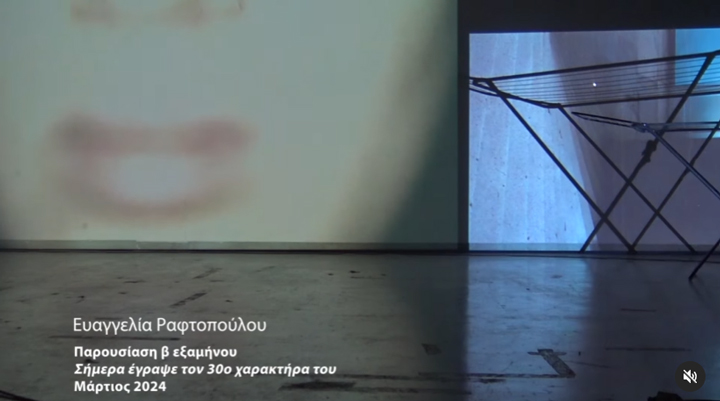
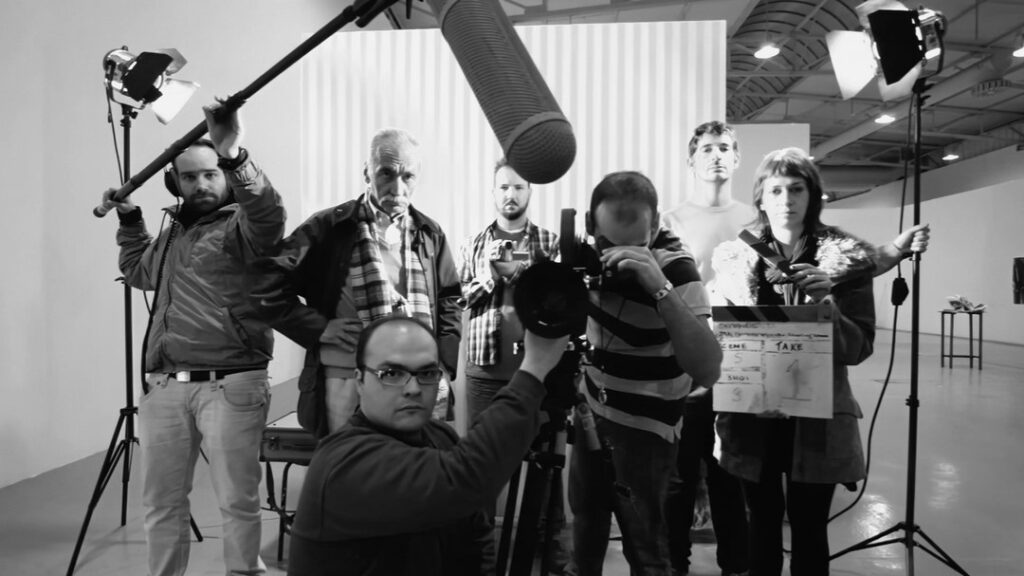
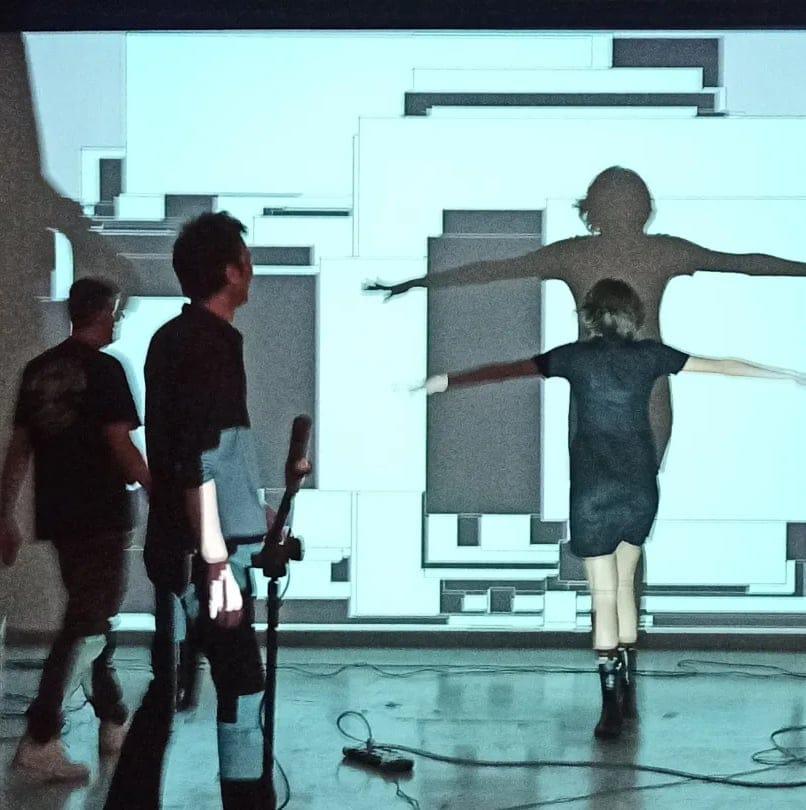
 Dafni Trikatsoula multichannel installation, thesis project 22